Girl Earth Fire Time
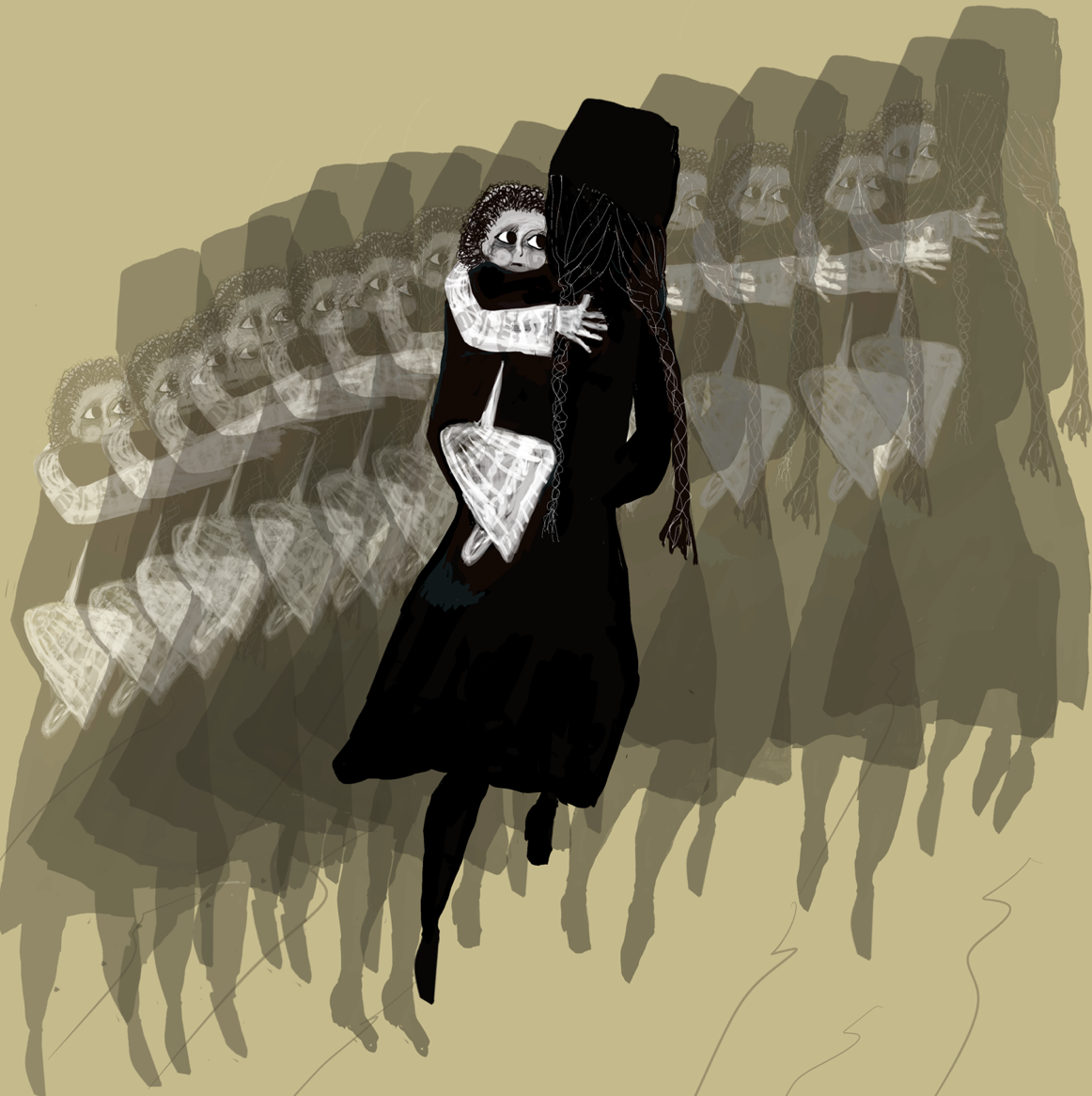


An animated VR experience, Girl Earth Fire Time charts a path toward reversing the human-made systems that have resulted in the atrocities we know as genocides. Based on Dana Mashoian Walrath’s disaster comic The Book of Genocides, (forthcoming from Harvard University Press) the experience will conscientize users to the reality that genocidal violence derives from specific cultural forces instead of our purportedly violent natures.

The experience begins with the user/viewer parting a curtain and entering the ancestral realm where the user is surrounded by a ring of people, eland, rhebok, fish, snakes, sheep, doves, eagle, bear, deer, otters, frogs, including a series of recognizable historical figures—both good and evil—some of whom shape shift between human and animal form. Our narrator, Oghidar, an Armenian woman, introduces the ancestral realm and the other main characters: a Palestinian boy, Mahmoud; Rafael Lemkin, the Polish Jewish lawyer who coined the term genocide and established the UNs genocide convention; and ||Kabbo an indigenous |Xam storyteller who preserved the stories of his people during  the 19th century colonization and genocide in today’s South Africa.

Next, Oghidar’s brings the user into her past, to her childhood a village in Western Armenia and her experience with the Ottoman perpetrated genocide that took place as their vast empire was dissolving.  She hides inside an urn as her family is torn apart by genocidal violence at the hands of Ottoman soldiers, of which the user catches a glimpse. She and her sister Arhsaluys flee by foot and run at night hundreds of miles to Aleppo, coming closer in both space and time to the Palestinian experience as the user returns to the ancestral realm.

The next scene unfolds in a New York City movie theatre where Oghidar, now a grown woman, watches newsreels of the Holocaust, an interview with Raphael Lemkin, speaking about the Armenians, and the Nakba. The bombing of the King David Hotel by Jewish terrorists takes over the theatre and brings back traumatic memories for Oghidar. The bombing morphs into the current bombing of Gaza.

Returning to the ancestral realm, Mahmoud and Lemkin are both distraught. Mahmoud hits his own head with stones and Lemkin rocks in pain, muttering about the uselessness of the convention and Mahmoud’s suffering. Oghidar stops Mahmoud and comforts him. Lemkin stands and approaches Mahmoud to unite their histories.  Their connection opens wider possibilities to heal across boundaries and through space and time.

The |Xam story of the girl, on earth, who made the Milky Way builds on the connection between Oghidar, Mahmoud, and Lemkin. It offers keeping a constant connection with the ancestral realm as a source of learning, of processing old wounds, and of healing. Weaving all these threads together lets the user experience the roots of genocide in a world order that has naturalized domination of one another and of nature. The |Xam alternative will opens a vision of living as one, with the ancestors ever present as a path to healing from and ending genocide.